
The Agentic Finance Landscape Report: Q2 2026 Edition
Written in collaboration with Cambrian teammates Brian, Doug, Pili, and Ricky.
Agentic finance is accelerating faster than anyone could have predicted, with new projects, new capabilities, and new primitives entering the fray since we published the last edition of The Agentic Finance Landscape in February. We continue to see AgentFi projects maturing, while receiving clear signals from institutions willing to invest in the Cambrian explosion of this new market segment. What kind of new financial world should we prepare for?
Echoing Jesse Pollak from Base, we’re heading toward a world where billions of agents will transact on blockchains. Leading institutions seem to agree. On April 2nd, Coinbase contributed the x402 protocol to the Linux Foundation, launching the x402 Foundation with Cloudflare and Stripe as co-founders, and AWS, Google, Microsoft, Visa, Mastercard, American Express, Shopify, Circle, the Solana Foundation, and Polygon Labs among the founding supporters. This wave of support only fuels AgentFi projects to keep investing in the invisible layers that make this emerging industry stronger.
This edition of our recurring agentic finance report surveys the landscape of autonomous products that support retail participants in decentralized finance (DeFi). As before, we applied a strict bar for excellence: listed projects must be active and publicly available, with real users and live capital at work (with an exception for informational agents that don’t transact). Agents are categorized by product type.
Note: In this edition, we’re including a new category under Traditional Finance (TradFi) participants. Our team will continue exploring and improving coverage of this market segment in upcoming reports.
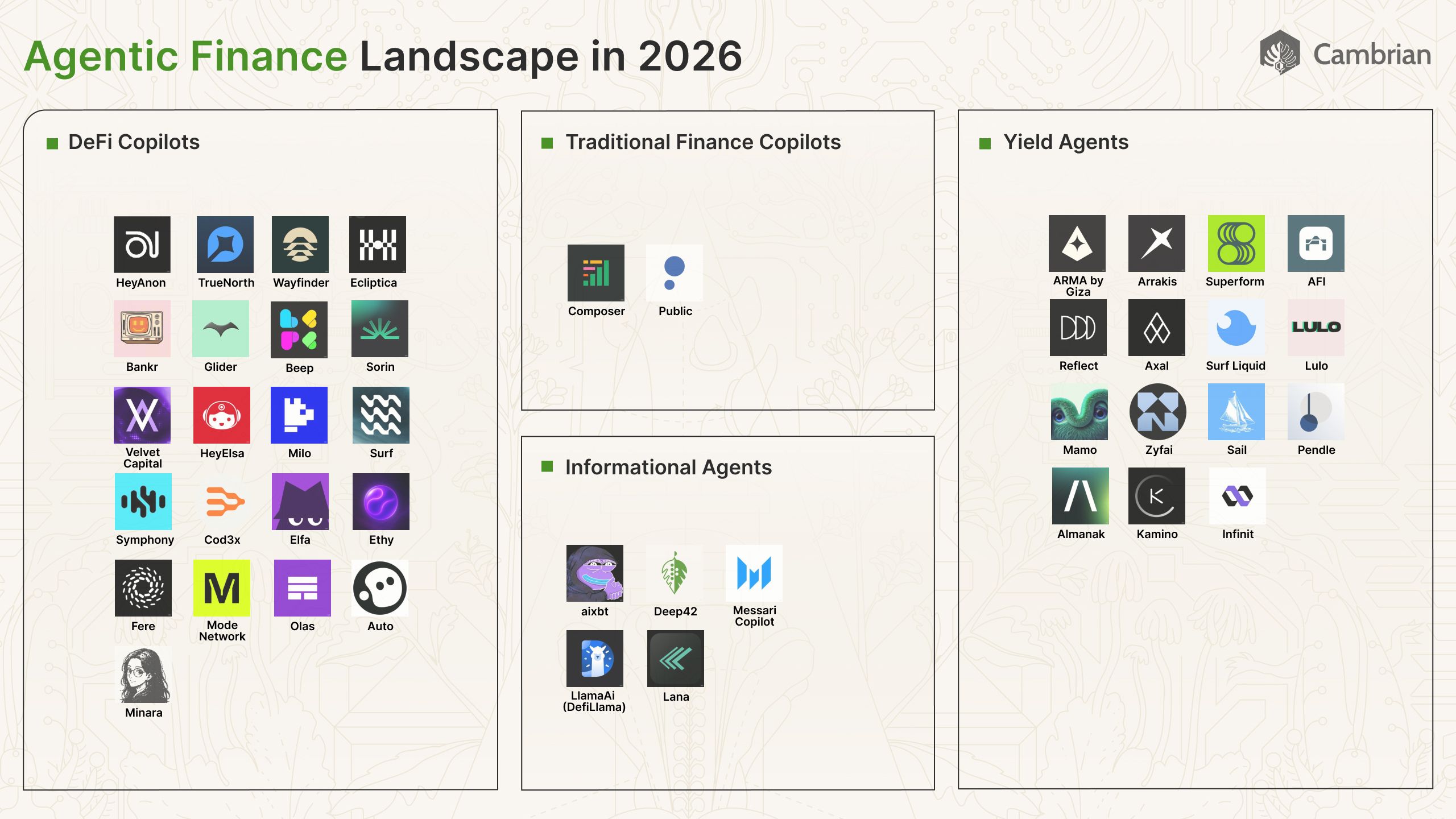
Jump down to learn more about each depicted project.
Table of Contents
- What is Agentic Finance?
- Autonomy vs. Intelligence in Agentic Finance
- AgentFi Market Growth
- The Agentic Finance Landscape Q2 2026
- What’s next for Agentic Finance?
What is Agentic Finance?
Agentic finance is an emerging market segment of products that use automation to actively manage user funds or provide financial advice. Inspired by ChatGPT, Claude Code, and rapidly-growing open-source agentic tools like OpenClaw or Hermes, some of these products use LLMs, while others employ hard-coded logic or traditional machine learning.
More and more, we are seeing that the best products are the ones that intelligently employ both LLMs and hard-coded logic for the right purposes. LLMs can act as researchers, sentiment analysis filters, strategy creation assistants, and orchestrators. Hard-coded logic is used for strategy backtesting, technical analysis, looping funds through vaults, and anything else that requires determinism. Integrating an LLM into a product without the right context, tool calling, and integrations is futile in a space where major AI companies are rapidly building out product suites to support their frontier models. In order to best compete in the marketplace, AgentFi products need to be highly specialized and focus on dominating their niche rather than attempt to be generalized tools. Regardless of the underlying tech, many of the projects listed in this report describe themselves as “agentic.”
For most of crypto’s history, agents were simple trading bots that automated execution. In late 2025, that boundary shifted to a production scale when hard-coded agents took the stage. Today, agentic finance is a recognized market category with strong players and growing institutional attention as we move toward a world where agents become fundamental economic actors with crypto rails as the perfect infrastructure.
The products covered in this report represent the next major step in AgentFi’s progression: software that makes decisions, manages capital, and even pays for its own existence.
Autonomy vs. Intelligence in Agentic Finance
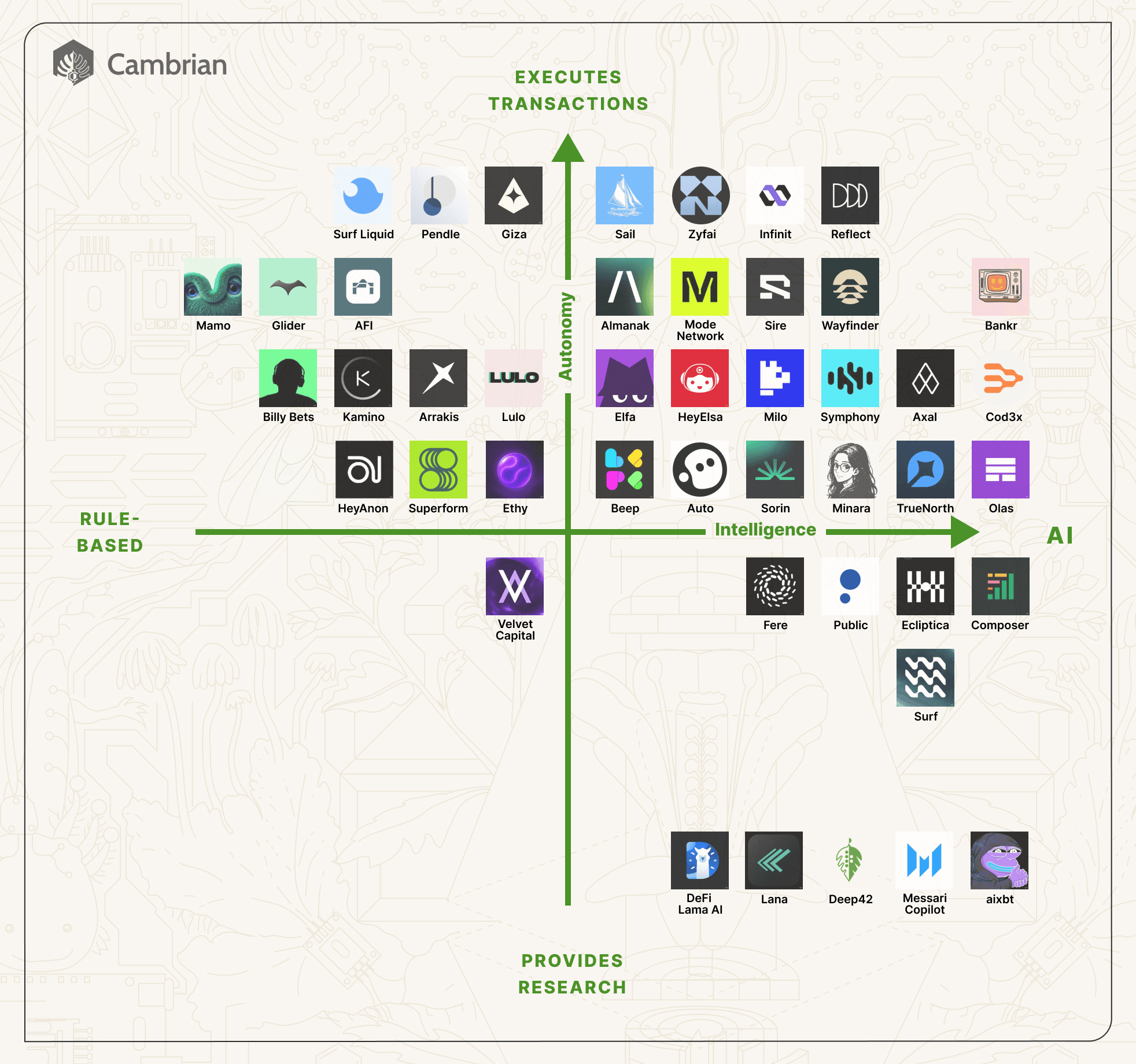
Agentic finance projects span specialized use cases, but each project can be placed on a simple compass. On the x-axis is intelligence: on the left, hard-coded systems that rely on math, Boolean logic and statistics; on the right, LLM-based systems (what many now call “AI agents”). The y-axis represents autonomy, ranging from tools that inform at the bottom, to human-in-the-loop systems in the middle, to autonomous systems that execute within policy without requiring permission at the top.
Since the first edition of this report, the center of gravity has shifted upward toward greater autonomy, while products with the most assets under management remain on the rule-based side of capital allocation decisions. LLMs are demonstrating their strengths in areas such as interface, information retrieval, and analysis. But when money moves, algorithmic, hard-coded agents remain the norm for reliability and auditability.
AgentFi Market Growth
Growth Metrics
Since our last report, unique users for onchain AgentFi products continue to gain adoption. Yield Seeker with $3.15M AUM on Base and ZyFAI with $3.9M AUM across Arbitrum, Base, and Plasma are leading user deposits in the last 30 days¹.
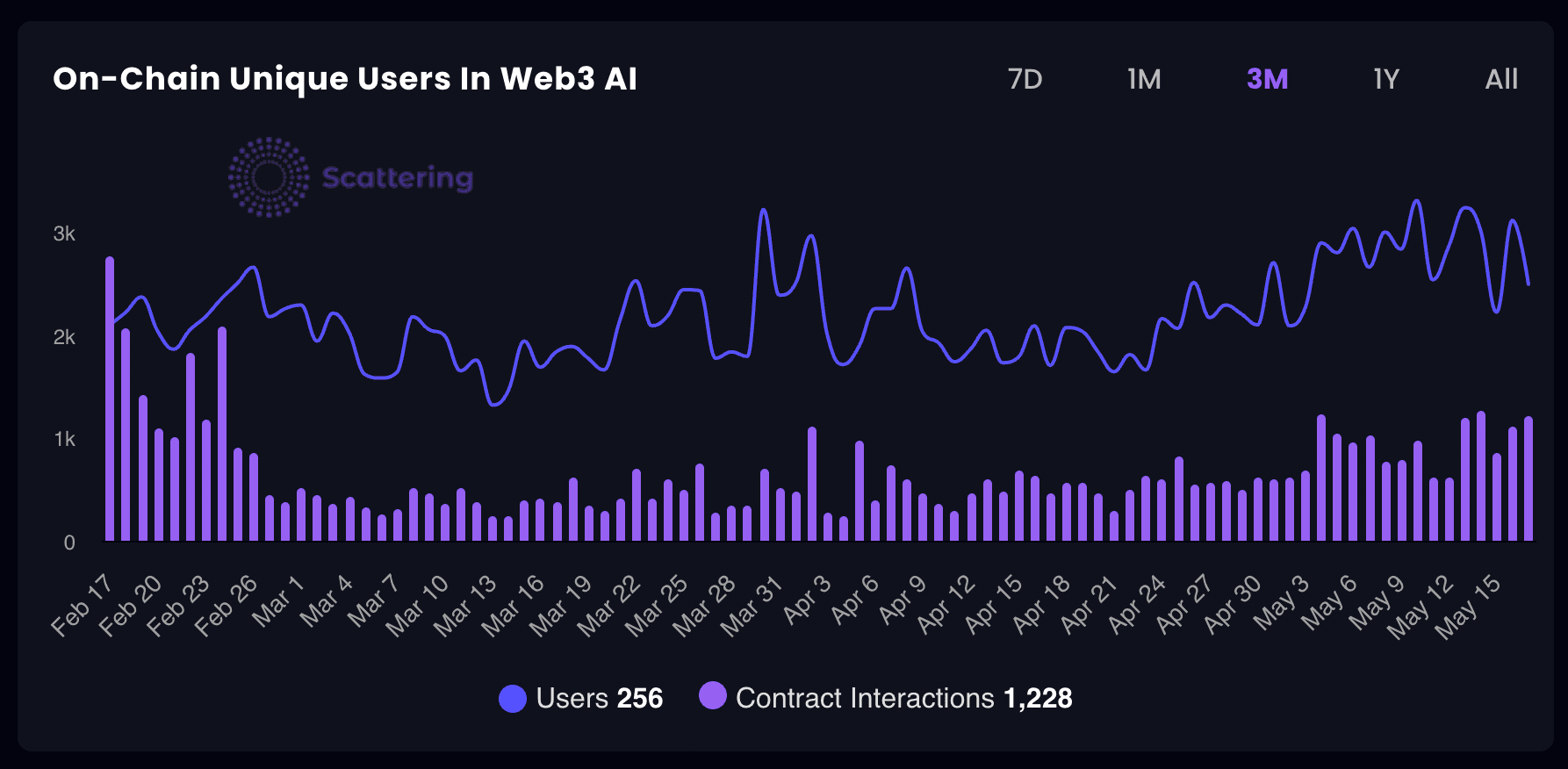
Source: https://scattering.io/agent_store/unique_users
Among the agentic projects that dominate the space, agents seeking yield on otherwise idle capital continue to lead in adoption and assets under management. Base also continues consolidating as the chain with the most agentic activity, with a $12M AgentFi TVL and 169M+ agentic payments; behind are Arbitrum with $7M and Ethereum with $417k AgentFi TVL. DEXs are not behind, Bankr’s agentic ecosystem surpassed $300 million weekly volume on Uniswap (Base)².
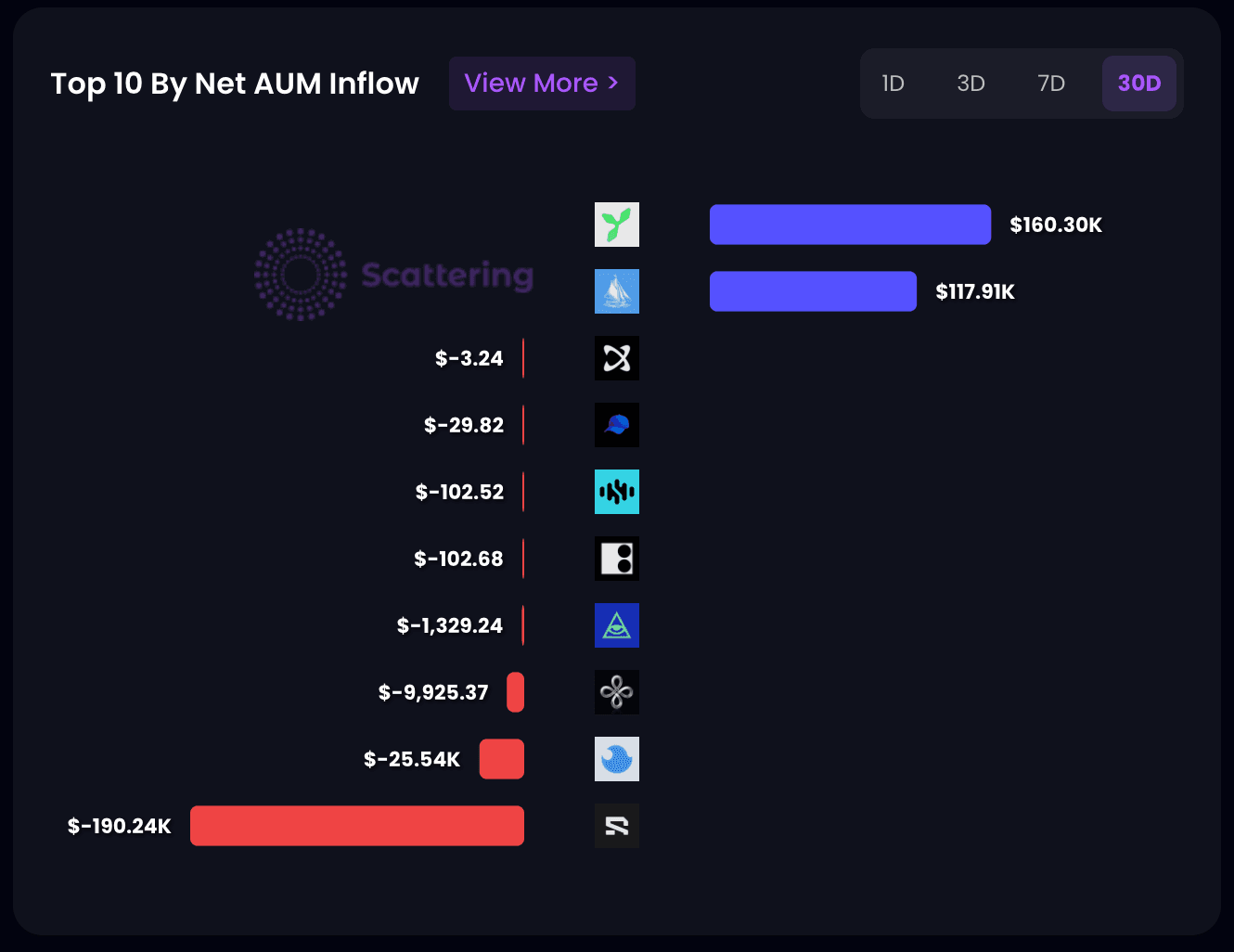
Scattering’s agentic finance chart of net AUM inflows over the last 30 days. Source: https://scattering.io/
Another indicator of growth lies in the x402 ecosystem, which continues to consolidate under the new x402 Foundation. x402 activity has seen sustained onchain volume during Q2 despite market volatility. Looking at the numbers, this standard has seen 3.7M+ transactions in the last 30 days, with ATXP, OAT MCP Aggregator, and x402 anyspend as the top services by x402 payment volume³.
If we look at ERC-8004 adoption, Agentscan reports 220k+ registered agents across 22 networks, including EVM and non-EVM chains such as Solana. In the last three months, ERC-8004 transactions have also increased significantly.
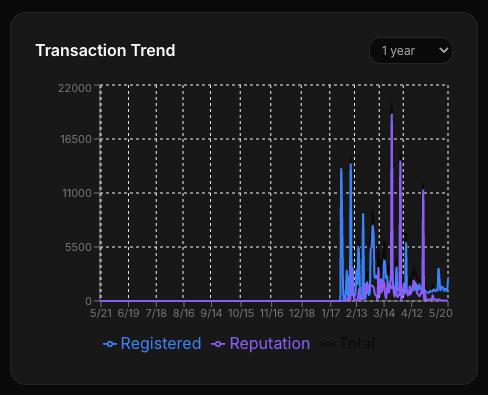
Source: https://agentscan.info/insights
Emerging Trends
Agentic commerce is a growing buzzword in this space, along with the belief that agentic commerce will surpass non-agentic commerce and that agents will be the economy’s primary actors. Micropayments remain another popular design space, regarded as a key use case favorable to autonomous agents and enabled by blockchains. Alongside that, we have seen the launch of new agentic payment tools, such as Agentic Payment Suite by Fireblocks and MoonPay Agents, as well as expanding native support for x402 across recognized chains like BNB from Binance.
Another entrant worth mentioning is Tempo, a Stripe-backed project that has also launched a new agentic payments standard, the Machine Payments Protocol (MPP), and recently enabled recurring subscriptions. Stripe and Tempo’s MPP marketplace processed 30k+ transactions in the first week with stablecoins as the default payment method⁴.
As the personal assistant aspect of agents evolves, and the need for them to manage money following strict rules becomes an existential requirement, agentic wallets, which users can authorize agents to make scoped transactions, have been gaining attention. Some interesting developments addressing the need for blockchain native, agent-friendly wallets we have seen this quarter are: Privy’s Agentic Wallets, Pinata’s Sponge Wallet Agent Template, Binance’s Agentic Wallet, Coinbase’s Agentic Wallet and Circle’s Agent Stack.
As institutions start looking at the most mature crypto primitives, we are starting to see benchmarks like DeFi Bench that measure how frontier AI models such as Gemini, GPT, Grok, and Claude can autonomously manage a pure DeFi yield portfolio.
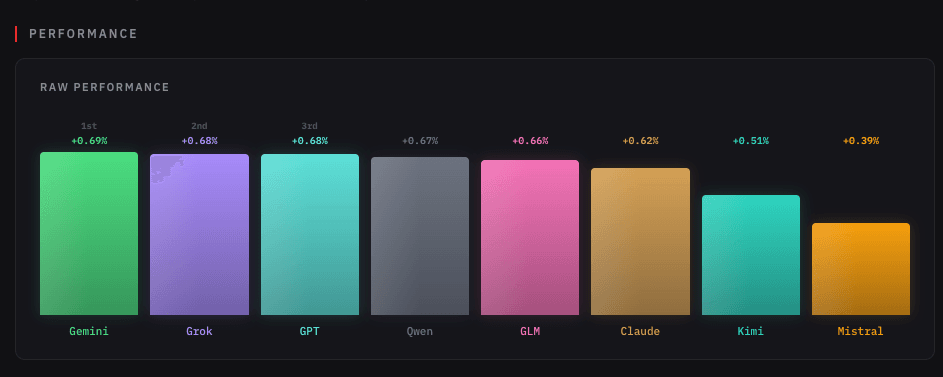
Source: https://www.defi-bench.com/analytics
These simulations are particularly interesting for seeing how existing models behave when managing risks under volatile market conditions.
Lastly, as we consider the reality that Q1 2026 has been the worst quarter for crypto hacks⁵, we have seen established yield-seeking agents demonstrate resilience in extreme market conditions. Demonstrating that agentic systems built in the right way are reliable for managing risk with specialized agents. A great example of specialized agentic tooling for this purpose is Zyfai’s ZyFUD agent.
The Agentic Finance Landscape Q2 2026
Retail users are the early adopters of agentic finance. Institutions are paying attention, but are still far from full-on adoption. Below, we list the most legitimate retail-oriented AgentFi products.
Cambrian employs a strict filter for inclusion in the Agentic Finance Landscape: We don’t list projects still in development or in internal testing, nor those that use only an LLM interface but require humans to make the “hard” decisions. This ruled out many projects.
DeFi Copilots
Many users interact with Agentic Finance primarily through AI agent harnesses such as Claude Code, Codex, and Cursor. This broad category covers products that offer people a way to interact with AgentFi through a specialized, typically web-hosted UI using natural language.
DeFi copilots are the first product most people think of when they hear “agentic finance.” These agents provide research, and also help manage users' funds by rebalancing portfolios or picking assets to buy or sell. Many have automations like simple buy-and-sells, and some allow the user to build and run more complex strategies. None of them are fully autonomous. Decision-making in trading requires access to an exchange, assets to trade, a specified budget, trading guidelines or rules, and high-quality data. The agentic tools below provide support for one or more of these aspects.
Due to this category maturing beyond simple trading agents, it has been renamed from Trading and Portfolio Optimization Agents to DeFi Copilots. Most of these products trace their roots back to chatbots that can take action, but many have expanded their feature set. They are also multi-chain wallets, token launch platforms, agent skills builders, and no-code tools. As this broad category is rapidly growing, we will segment this category into subcategories in future updates.
Yield Agents
Earning yield in AgentFi is possible through many paths. The most popular at the moment is through lending protocols like Morpho, Aave and Euler, where borrowers pay interest, which lenders receive as yield. Users can also provide liquidity in DEX (Decentralized Exchange) liquidity pools to receive trading fees, or deposit funds into curated vaults that allocate capital across multiple venues. The agents below help users find the best risk-adjusted returns across these strategies.
As time has progressed, we’ve found that more and more projects are combining multiple yield-generating strategies, including but not limited to lending, LPs, and spot trading. This is due to the difficulty in maintaining an edge in the lending where TVL is mostly concentrated in a small bucket of top pools, and current yields are comparable to buying safe assets like U.S. Treasuries. We expect to see further adoption of more advanced approaches to pursue higher-yields.
Informational Agents
Investors often use market analysis to determine what to buy and sentiment analysis to decide when to buy or sell. LLMs have significantly transformed both market and sentiment analysis by scaling the amount and speed of data analyzed and by creating a deeper contextual understanding through connections between data sources⁶. A distinguishing feature of analysis agents and the agents above is that they do not take direct actions; instead, they provide informative guidance. There are many analysis agents; we only list a few below.
Traditional Finance Copilots
Similar to DeFi Copilots, Traditional Finance (often called TradFi) copilots are AI-powered research and trading assistants that execute on traditional brokerages rather than blockchains.
Many DeFi copilots offer exposure to equity markets through tokenized stocks and, more commonly, derivatives such as stock and pre-IPO stock perps. Many of these products are not available to U.S. users, but are becoming popular internationally for their ability to give access to U.S. financial instruments; some products navigate local regulatory barriers and can provide fiat onramp and offramp as well as a traditional trading experience. In this report, we still consider them a kind of DeFi copilot, as they ultimately settle transactions onchain. Conversely, the TradFi products in this category may be offered through brokerages that support crypto trading.
Returning readers might notice that we’ve removed the Prediction & Betting agents category. Though prediction markets have seen widespread product market fit, AgentFi tools supporting them are still experimental and in their infancy. We expect to add this category back in future reports as the space matures.
What’s next for agentic finance?
2026 kicked off with stress-testing crypto infrastructure at a speed never seen before. More than $1 billion was lost to DeFi hacks during the first quarter of the year⁷. Attack vectors were likely accelerated by the rapid development of AI, leaving incredibly capable models and tools in the hands of hackers who operate at scale. After peaking above $4 trillion in late 2025, the crypto market cap sits at $2.59 trillion at the time of this report’s writing⁸. Nevertheless, we continue to see strong institutional players building on crypto rails, with agentic finance at the center of financial innovation.
Agents are rapidly maturing into fundamental economic actors. Experts project that agents will handle ~30% of US online commercial sales ($183 trillion) over the next 5 years⁹. With clear signals, a shift is occurring alongside the sustained consolidation of crypto-native payment adoption leveraging stablecoins.
This trend is being followed by a growing recognition that the crypto industry's infrastructure offers significantly more efficient rails than traditional finance¹⁰. For instance, the State of Agents 2026 report highlights that average agent-to-agent transaction costs have reached parity with Visa's fixed fee of ~$0.30, making traditional payment rails increasingly unsustainable by comparison, if the trend in cost reduction continues.
It’s no surprise that, given agents’ efficiency in blockchain payment environments, we have seen increasing investment in crypto payments by established institutions. As stablecoin adoption by agents grows, we can expect to see more hybrid payment solutions combining stablecoins and incumbent technologies. Some relevant examples are Stripe’s machine payments and agent wallet, Visa’s Intelligent Commerce, and the MetaMask Card powered by Mastercard and Aave. It is also worth noting that institutions like Mastercard, Visa and Stripe are also investing on agentic payments products that settle on traditional rails.
Despite market volatility, institutional adoption continues to expand, mostly towards real-world assets (RWAs) and stablecoins, building the breeding ground for AgentFi to scale with battle-tested infrastructure. The distributed value of RWAs has reached $33 billion, surging 10x in two years¹¹ and stablecoins hit a new ATH market cap of $320 billion¹². Relatedly, BlackRock’s BUIDL has surpassed $2 billion in assets under management, making it the largest tokenized fund in the world¹³.
Regulatory clarity and the convergence of DeFi, TradFi, and AI
Following Franklin Templeton’s announcement of a new institutional-grade crypto investment unit, we reinforce their assertion that crypto’s institutional moment has arrived.
Financial history is in the making. Institutions need to navigate the crypto landscape with an unprecedented level of professionalism. The need for new frameworks like risk management, compliance, and transparency is growing. The convergence of DeFi, TradFi, and AI will shape the future of crypto and mark the pace for innovation inside the industry, as we’re seeing with agentic payments and stablecoin adoption.
In the words of Sandy Kaul from Franklin Templeton, “Crypto is the delivery infrastructure that will help unlock the full potential of the agentic economy.” Having TradFi join the scene to build these rails is essential. The innovation that crypto-natives bring needs to be paired with an understanding of consumer protection. This means that institutional-quality due diligence and quality controls need to be in place for trillions of dollars to shift in the upcoming years¹⁴.
The regulatory landscape continues to shift towards applying clear rules to the crypto economy. With the CLARITY Act passing through the Senate Banking Committee and a floor vote expected before summer, the US is staking out a leading position on crypto innovation.
Along the same lines, the Hong Kong Monetary Authority (HKMA) continues to move forward with regulating stablecoins and announced that two large banks with global rails, HSBC and Anchorpoint Financial Limited, are now permissioned HKD-stablecoin issuers¹⁵. In addition, the FCA in the UK recently published its CP26/13 Consultation Paper¹⁶, setting out the upcoming regulatory framework for crypto assets. It should be noted, however, that no other stablecoin has the popularity of the dollar, with the second most popular stablecoin being USDT with a $189 billion market cap¹⁷.
The AI industry is also making significant strides to strengthen AML initiatives. A clear example is Anthropic’s Applied AI team joining FIS (which powers ~12% of the global economy) to co-design a new Financial Crimes AI Agent that combines Claude’s unique technology with FIS banking and data infrastructure¹⁸. BMO and Amalgamated Bank are first-in-pilot, with general availability planned by the end of Q2 2026.
As outlined in the previous report, we expect sustained growth in stablecoin adoption and usage, as they are positioned as a critical catalyst for the mainstream adoption of agentic finance. Leveraging stablecoins, micropayments will see widespread adoption, and new standards on top of the existing infrastructure, such as ERC-8211 (The Execution Standard for Onchain Agents), will solidify the identity tooling available to agents. On the pure AgentFi side, yield agents will likely continue to consolidate and build tooling to operate at scale with more complex risk-management and yield-generation strategies, as trading and copilot agents continue to gain widespread adoption.
We also expect the DeFi landscape (including yield-bearing agents) to continue building tooling to offer auditable, safer products to onboard the next billion users. Crypto companies will also shift how they operate to meet the standards of the world's largest banks and wealth managers.
To stay ahead of the agentic finance curve:
- Sign up for the Cambrian newsletter to be notified of our next post.
- Join the Cambrian Discord to stay up to date with Cambrian news.
- If you’re a developer building agentic applications, register for the Cambrian API limited-access advanced release cohort.
Lastly, connect with me on X to share your ideas or to let me know if I’ve missed anything in this year's first edition of the agentic finance landscape.
Note from the editor: the Cambrian team has changed the naming convention of the quarterly Agentic Finance Landscape reports to be titled with the quarter they’re released in, instead of focusing only on the previous quarter.
About the author
Sam Green is the founder of Cambrian Network, the financial intelligence layer for agents. Before Cambrian, Sam co-founded and served as CTO at Semiotic Labs, leading AI and verifiability efforts for The Graph. Sam also helped develop Odos, a leading crypto trading platform that has handled $100 billion in trading volume for 3 million users. Previously, Sam was an AI and cryptography researcher at Sandia National Labs. Sam holds a master's degree in applied mathematics and earned a Ph.D. in computer science at UC Santa Barbara.
About Cambrian
Cambrian is the financial intelligence layer for agents and institutions. Our API delivers real-time and historical blockchain data, covering yield, liquidity positions, risk, trading activity, and market sentiment, for agentic and institutional DeFi applications. Founded in 2024, Cambrian is backed by a16z and Blockchain Builders.
This content is for general information only and does not constitute financial, investment, legal, or tax advice. Accuracy is believed reliable at the time of publication, but is not guaranteed, and opinions may change without notice. You should conduct your own research and consult qualified professionals before making decisions. References to third‑party projects do not imply endorsement. The author and publisher accept no liability for any loss or damage arising from reliance on this material.
Sources:
¹ https://scattering.io/agent_store/unique_users
² https://x.com/Uniswap/status/2057835994242576779?s=20
³ https://www.x402scan.com/
⁴ https://x.com/MilkRoad/status/2046724674110066988?s=20
⁵ https://www.thestreet.com/crypto/markets/q1-2025-with-thefts-worth-1-64b-the-worst-quarter-ever-for-crypto-hacks
⁶ https://scholar.google.com/scholar?hl=en&as_sdt=0%2C44&q=can+LLMs+prove+financial+guidance&btnG=
⁷ https://www.ccn.com/education/crypto/defi-hacks-exploits-causes-crypto-stolen-2026/
⁸ https://coinmarketcap.com/charts/
⁹ https://youtu.be/TjzMZqN_29k?t=1084
¹⁰ https://x.com/0xsamgreen/status/2055002871481917890?s=20
¹¹ https://app.rwa.xyz/
¹² https://x.com/Cointelegraph/status/2044415791890628947?s=20
¹³ https://blocklr.com/news/blackrock-buidl-tokenized-treasury-2b-aum/
¹⁴ https://youtu.be/TjzMZqN_29k?t=1044
¹⁵ https://www.hkma.gov.hk/eng/news-and-media/press-releases/2026/04/20260410-4/
¹⁶ https://www.fca.org.uk/publications/consultation-papers/cp26-13-cryptoasset-perimeter-guidance
¹⁷ https://www.coingecko.com/en/coins/tether?chart=type%3Dprice%26mode%3Dline%26timeframe%3Dmax
¹⁸ https://www.fisglobal.com/about-us/media-room/press-release/2026/fis-brings-agentic-ai-to-banking-with-anthropic-starting-with-financial-crimes